
I was invited yesterday to speak at the EV Charging Infrastructure Conference on a topic that is both close to my heart and increasingly urgent:
How do we design an EV charging system that supports mainstream adoption in Australia?
This was not a discussion about hardware specifications or connector types. It was a conversation about system design and about ensuring we, as an industry, deliver infrastructure that is fit for purpose, equitable and aligned with real-world behaviour.
The core message was simple:
Public fast charging alone will not deliver mainstream EV adoption.
The Reality of Australia’s EV Transition
Australia’s EV market is accelerating. According to the latest State of EVs 2025 report by the Electric Vehicle Council, EV sales continue to grow year on year. At the same time, the national EV Ownership Survey shows that charging access remains one of the top concerns for drivers.
We are now nearing the cusp of transitioning from early adopters to mainstream households.
The infrastructure decisions we make today will shape how smoothly that transition unfolds. If the system we build does not reflect how people actually live, park and travel, we risk slowing momentum just as adoption scales.
Having worked on large-scale transformation programs earlier in my career, I have seen firsthand that technology alone does not determine success. What matters most is whether what we build is fit for purpose and genuinely works for end users. The same principle applies here.

What Drivers Really Need
When we started building ivygo, we began with behaviour.
Not only the behaviour of existing EV drivers, but of future mainstream drivers. The households who will only switch if charging fits seamlessly into everyday life without having to compromise.
Over the past year, we have engaged directly with drivers at public charging sites, community events and across regional Australia to understand how charging integrates into routine. The patterns have been remarkably consistent.
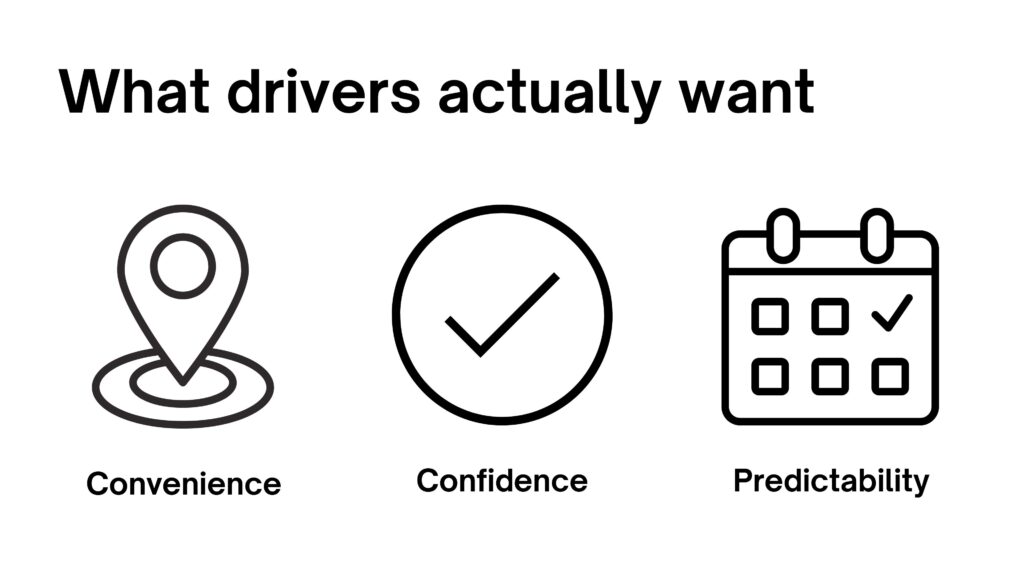
Drivers want convenience, confidence and predictability.
They do not want to detour across town simply to access energy. They do not want to spend unnecessary time waiting. They want certainty that the charger will be there and that it will work. They want charging to be integrated into the places they already live, work and spend time.
Unlike petrol, electricity can be accessed almost anywhere. That is one of the structural advantages of EVs — but only if the system is designed to unlock it.
Where Charging Actually Happens
EV charging is often discussed as if it were a single activity. In reality, it serves several distinct use cases.
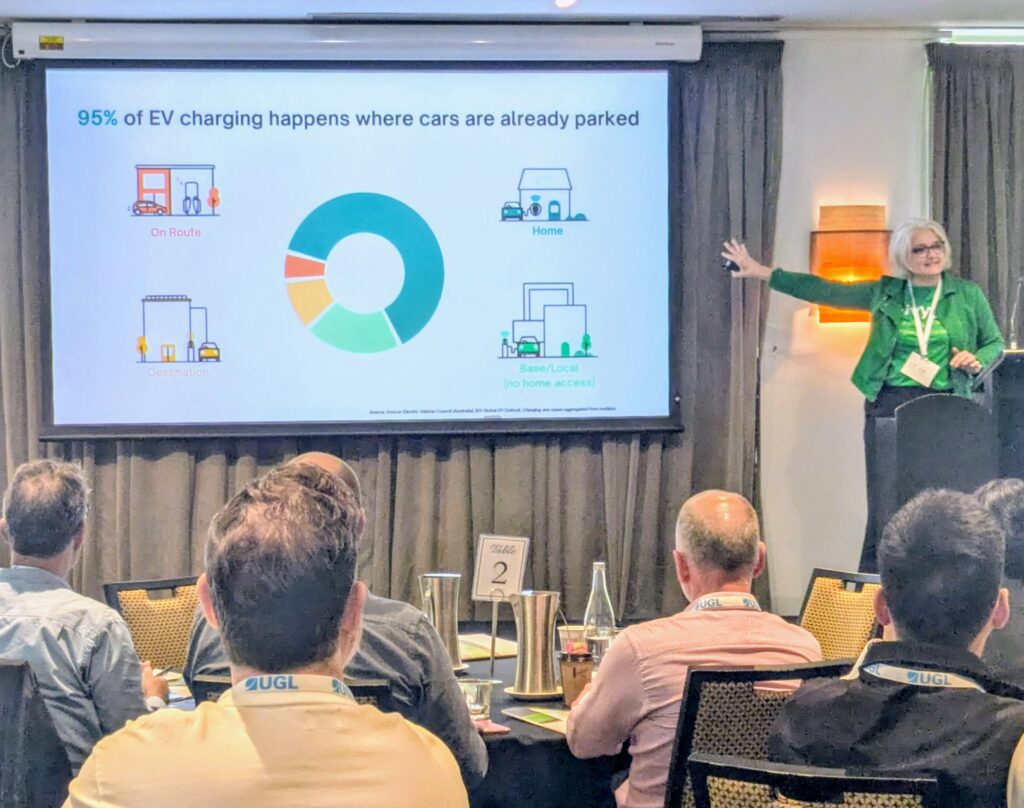
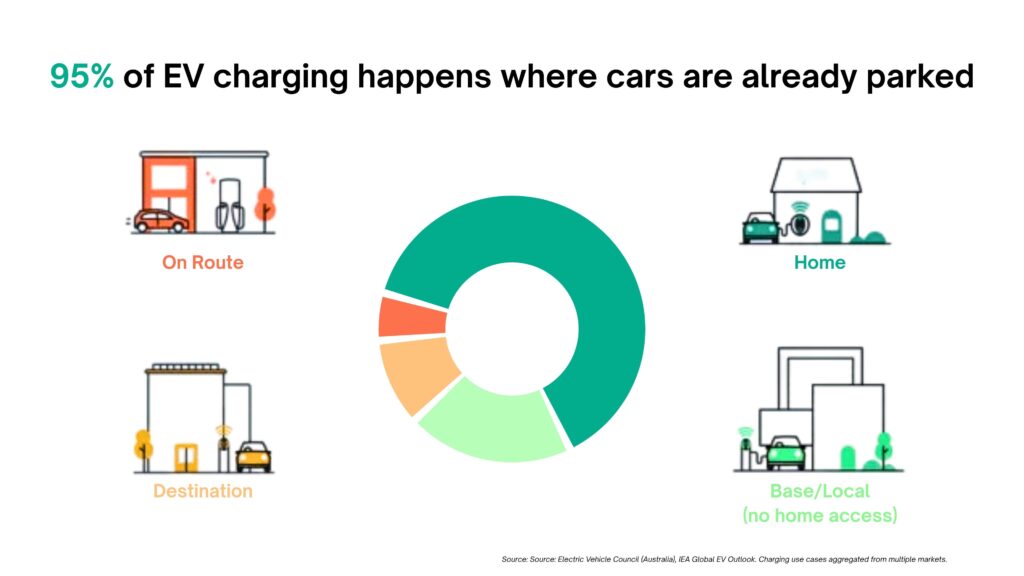
Over 60% of charging happens at home. Around 23% is local or base charging mostly for drivers without home access. Roughly 12% is destination charging. Only about 5% is on-route (fast) charging.
In other words, around 95% of charging happens where vehicles are already parked for extended periods.
Fast charging is essential infrastructure. It builds network confidence and enables long-distance travel.
However, it was never designed to replace the 95% of charging use cases that occur during everyday life.
The Fast Charging Mindset
Fast charging largely mirrors the petrol station model.
You drive somewhere specifically to refuel. You wait. You leave.
It keeps charging as a deliberate, time-bound activity, separate from daily life.
Electric vehicles offer an opportunity to move beyond that model.
Most cars are parked for hours at home, at work or at destinations. During those idle periods, energy can be delivered slowly and quietly without disruption. Charging can become something that happens in the background rather than a task requiring dedicated time.
When charging happens where vehicles already sit, it fades into routine.
If the system is built primarily around high-speed hubs, drivers remain tied to the old behaviour of driving somewhere to access energy. That creates friction and often concentrates infrastructure in highly visible locations rather than behaviourally optimal ones.
We already see this dynamic happening in regional towns around Australia. A single fast charger may be underused in quieter periods because most local residents charge at home. Yet during peak seasons, one or two high-speed plugs can create queues and frustration for visitors.
A more distributed approach — with AC chargers at hotels, restaurants and tourist attractions — allows visitors to charge while exploring or staying overnight. It decentralises demand, keeps economic benefits within the community and often delivers greater flexibility at lower cost.
Location Determines Utilisation
When drivers say they want convenience, what they mean is location.
With obviously the ability to charge at home being the ultimate most convenient option. But for those who cannot charge at home, or when travelling, location becomes critical.
From our data at ivygo, one insight is clear: a charger within walking distance of where a driver intends to spend time is typically preferred over a faster charger that requires a dedicated trip.
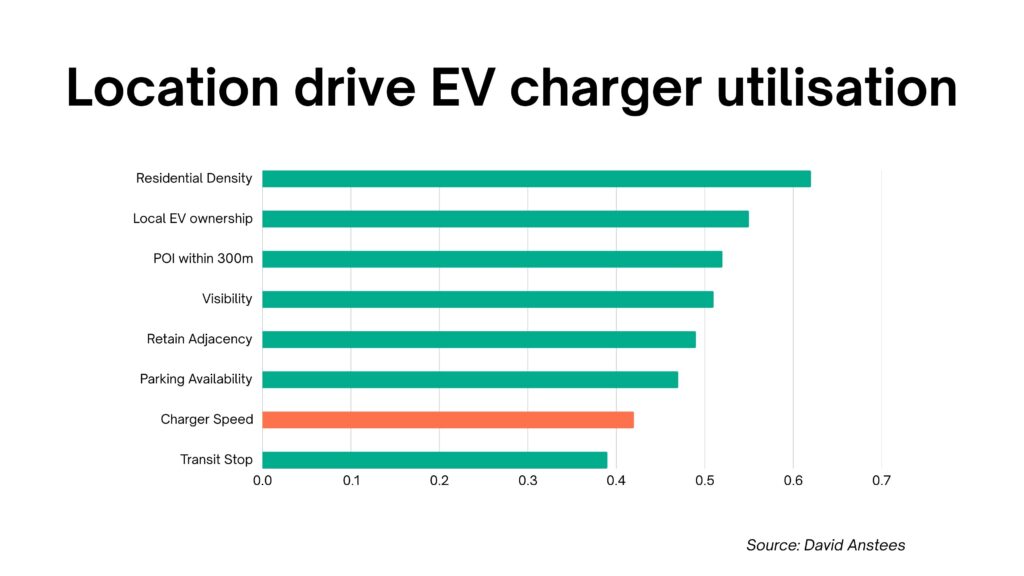
Research by David Anstees, supported by the Australian Renewable Energy Agency, reinforces this. The strongest drivers of utilisation are residential density, local EV ownership, visibility, proximity to destinations and parking availability. Charger speed is rarely the decisive factor.
International markets tell a similar story. In Europe, despite around 9 million EVs and more than 1 million public chargers, utilisation at many fast charging sites averages between 2% and 8%.
This is not a technology failure. It is a placement issue.
Early deployment strategies understandably focused on increasing charger numbers as a signal of progress. The more meaningful and transparent metric is utilisation.
Designing the System for Mainstream Adoption
A successful transition requires a layered ecosystem that reflects real life.
- Fast chargers on highways when time truly matters.
- Street-based chargers in high-density suburbs.
- Local charging options for residents without driveways.
- Shared charging solutions for apartment dwellers.
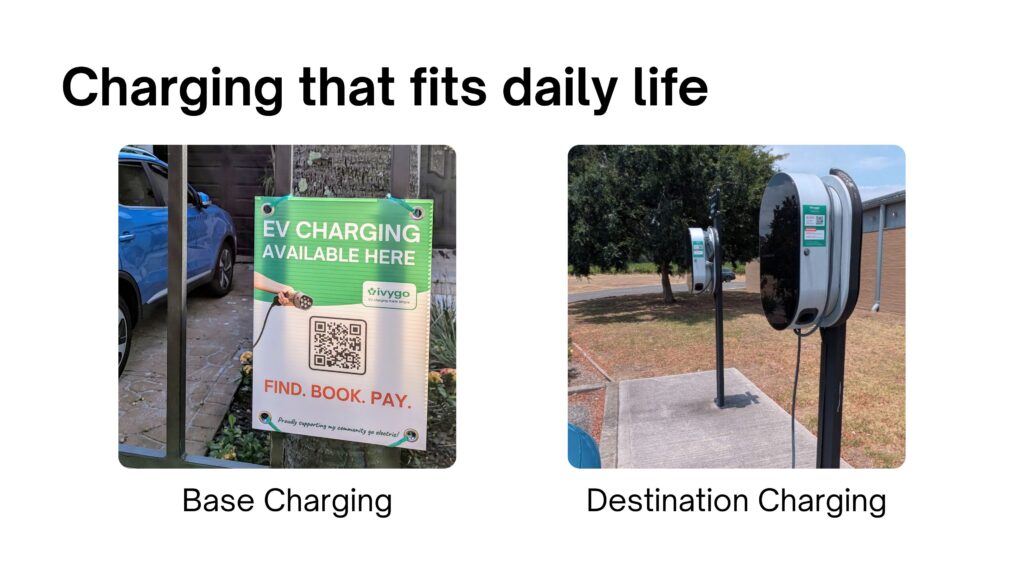
- Destination charging at venues for travellers.
Over time, this supports a shift away from the petrol mindset of filling from empty to full and toward opportunistic charging — small, seamless top-ups wherever a vehicle is parked.
When that happens, charging stops feeling like infrastructure and becomes part of everyday life.
Public fast charging is essential. But it cannot carry the transition alone.
If we want EVs to move from early adopters to mainstream households, charging needs to feel boring, invisible and everywhere.
No detours.
No anxiety.
No unnecessary friction.
Mainstream adoption will not be delivered by multiplying underutilised assets.
It will be delivered by placing the right solution in the right location and designing infrastructure around real human behaviour.
That is how we build confidence at scale.
And that is how we ensure the transition to electric transport works for all Australians.